
Wire shelving units are everywhere once you start looking — pantries, garages, closets, stockrooms, even retail displays. They look simple, but a unit that holds your pantry jars is not the same unit that holds workshop tools. The difference comes down to wire gauge, coating, load rating, and how adjustable the frame is.
This guide walks through the decisions that actually matter when you buy a wire shelving unit, so you get one that fits the room, holds the load, and does not rust in a damp corner. If you are sourcing from a factory, it also tells you the spec points to put in your RFQ.
What Is a Wire Shelving Unit?
A wire shelving unit is built from metal wire — usually iron or steel wire — welded into an open grid pattern. The shelves are not solid panels; they are lattices with gaps between the wires. That open design is the whole point: air moves through it, light passes, and you can see exactly what is on each level.
At YankunMetal we manufacture wire shelving from iron wire with a powder-coated finish. The coating is what gives the open wire both its color and its corrosion resistance — bare iron rusts, coated iron does not. Most household and light-commercial units use thin-to-medium gauge wire over a steel or iron frame.
If you want the deeper comparison between wire and solid steel, see our guide on Wire Shelving vs Steel Shelving.
The Main Types of Wire Shelving Units
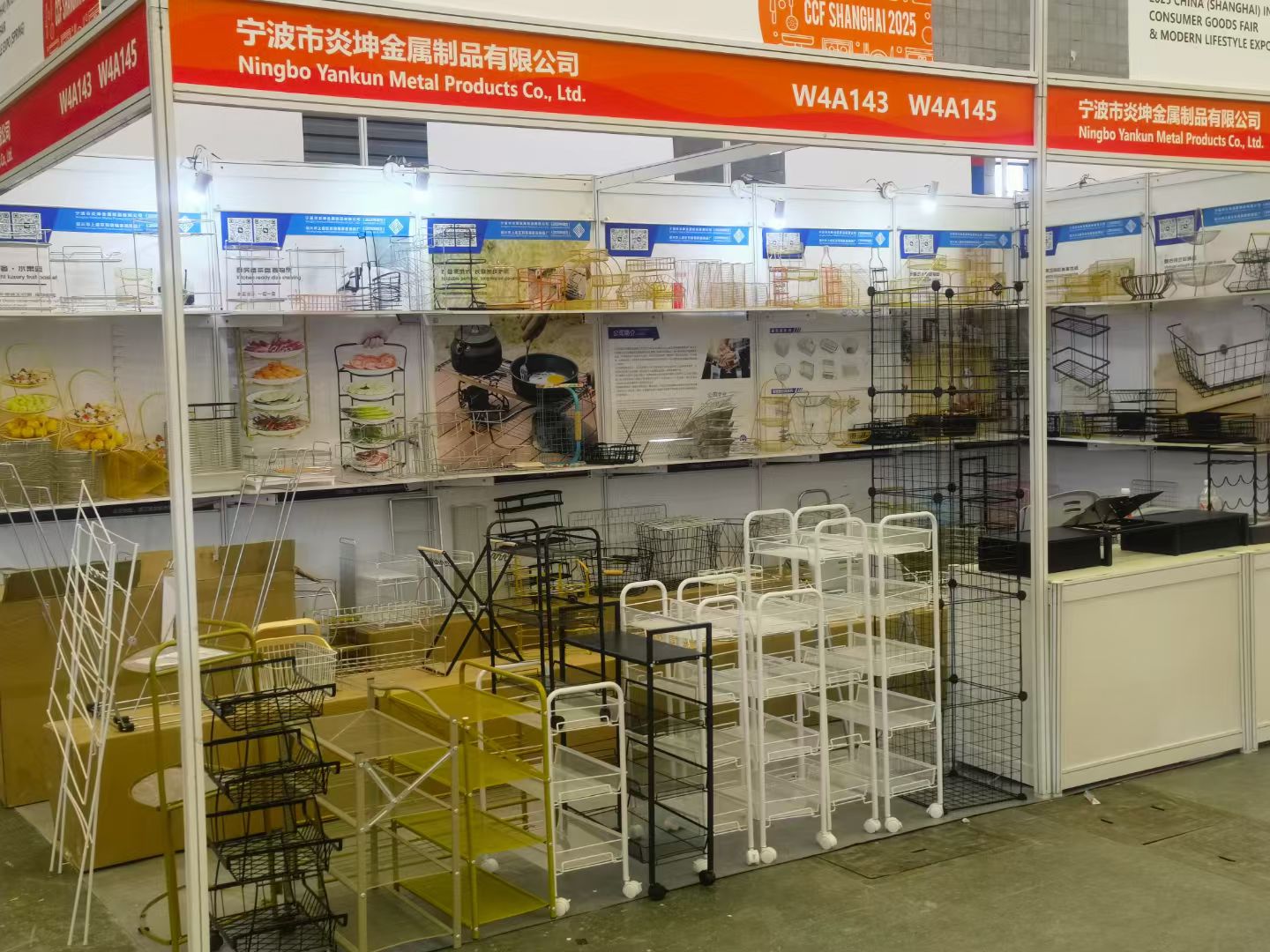
| Type | Best for | Typical load per shelf | Notes |
|---|---|---|---|
| 5-tier stationary unit | Pantry, closet, laundry | 100–200 kg | Most common home format |
| Adjustable unit | Mixed storage | 80–150 kg | Shelves move on clips |
| Heavy-duty / industrial | Garage, workshop | 200–400 kg | Thicker wire + reinforced posts |
| Unit with wheels | Mobile stock, kitchen | 100–200 kg | Locking casters recommended |
| Wall-mounted | Small spaces | 20–50 kg | Frees floor space |
The type decides the frame. A 5-tier pantry unit and a heavy-duty garage rack may look similar from a distance, but the wire gauge and post thickness are very different. Pick the type before you pick the size.
Load Capacity: How Much Can It Hold?
Load rating is the number buyers ask about first and understand least. Two things set it:
- Wire gauge — thicker wire holds more. A shelf rated for 150 kg uses noticeably heavier wire than one rated for 50 kg.
- Shelf spacing and support — wider gaps between support points reduce capacity. Units with cross-bracing or a welded grid hold more than loosely clipped shelves.
A common mistake is reading the "total unit capacity" and dividing by shelf count. Real-world load is limited by the weakest shelf and by how evenly weight is spread. Put the heaviest items low and centered, not on the top tier.
If you are specifying from a factory, put the per-shelf load, wire diameter, and post thickness in the RFQ — our RFQ checklist for wire baskets applies to shelving just as well.
How to Choose the Right Size
Match the unit to the room before you match it to the stuff.
| Room | Suggested size (W×D×H) | Tier count |
|---|---|---|
| Pantry | 450–600 × 350–400 × 1500–1800 mm | 4–5 |
| Closet | 800–1000 × 400 × 1800–2000 mm | 5–6 |
| Garage | 900–1200 × 400–500 × 1800 mm | 4–5 heavy |
| Kitchen counter | 400–500 × 250–300 × 600–900 mm | 2–3 |
| Bathroom | 300–450 × 250–300 × 600–1200 mm | 2–4 |
Depth matters more than people expect. A 400 mm deep shelf holds most bins and boxes; a 250 mm deep shelf is better for narrow items like spices or cleaning bottles. Do not buy a unit deeper than the wall it sits against, or it will block the walkway.
Coating and Rust Prevention
Iron wire is strong and cheap, but bare iron rusts. The coating is what separates the product from moisture, salt air, and cleaning steam. For wire shelving, the two mainstream finishes are:
- Powder coating — a baked polymer layer, thick and even, matte or gloss. Our default at YankunMetal. Best all-round rust resistance.
- Chrome plating — brighter, more "commercial" look, but a thinner protection layer. Better for dry indoor use.
For bathrooms, kitchens, and any damp space, powder coating wins. The pre-treatment before coating matters as much as the coating itself — a great coat over a rushed degrease still fails. Our surface treatment guide explains the four finishes and when each one is right.
Adjustable vs Fixed Shelves
Adjustable units use clips or connectors on the posts so shelf height moves in steps (usually 25 mm). The upside is flexibility — one unit serves pantry jars today and tall bottles next month. The downside is slightly lower per-shelf load than a fully welded fixed shelf.
Fixed (welded) shelving is stronger per kilo and cheaper to make, but you live with the spacing you bought. For a single fixed purpose — say a laundry basket rack — fixed is fine. For anything that might change, adjustable is the safer buy.
Where Wire Shelving Units Work Best
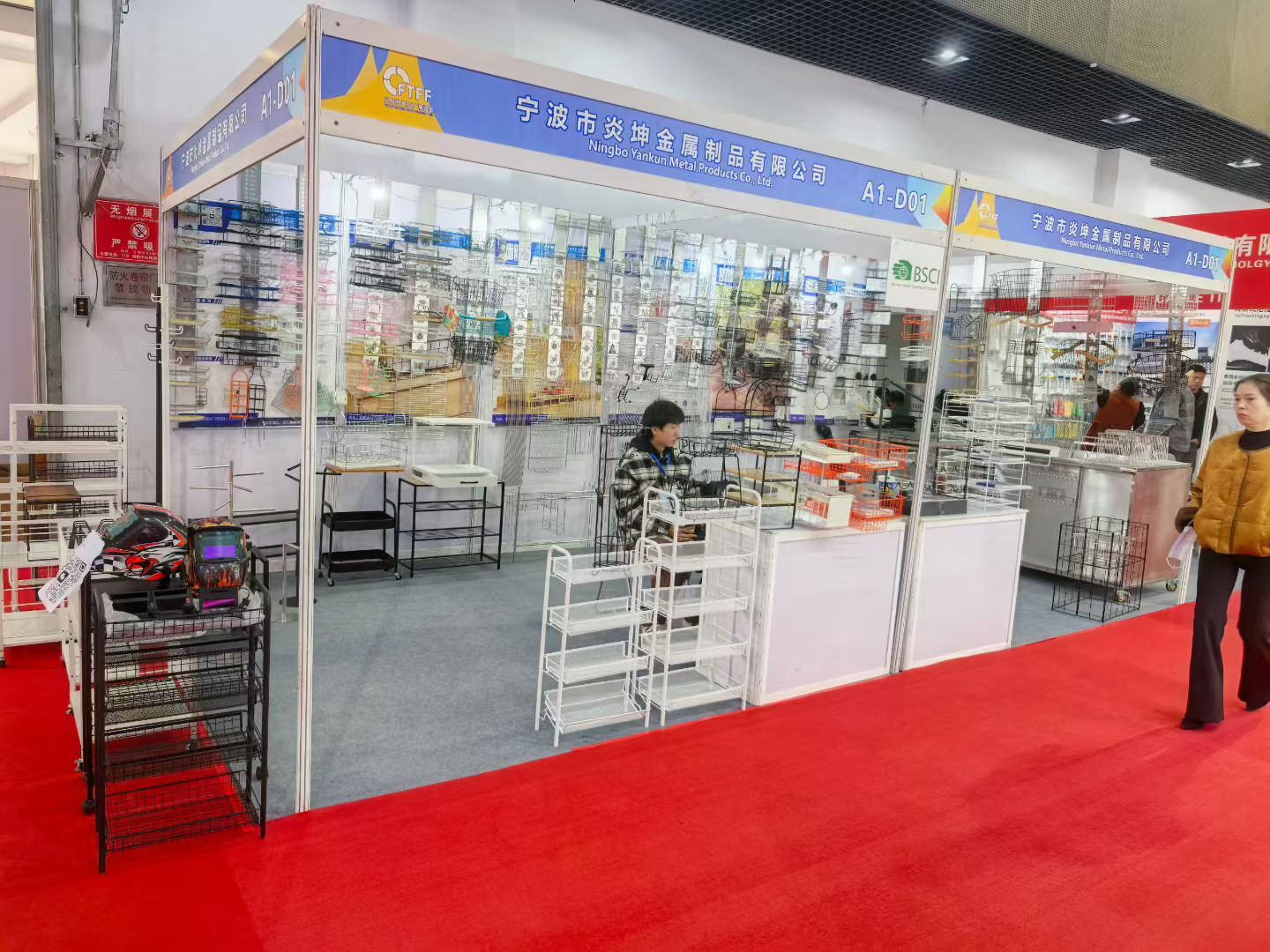
- Pantry — the open grid keeps air moving around food, with no stale corners.
- Garage / workshop — heavy-duty units hold tools and bins; wheels add mobility.
- Closet — tall narrow units multiply hanging and folded space.
- Kitchen — countertop or between-counter units for appliances and jars.
- Bathroom — powder-coated units resist steam; keep them off direct water spray.
- Retail / display — the open look shows product clearly and pairs well with wire storage baskets.
Assembly and Installation
Most home wire shelving units are boltless — posts slot together, shelves clip on, and leveling feet screw into the base. Setup takes minutes with no tools beyond a rubber mallet. Two tips:
1. Level the feet. Uneven floors tip tall units. Adjustable feet fix this; use them. 2. Anchor tall units. Anything over 1800 mm in a garage or a kids' room should be wall-anchored.
Heavy-duty units may use bolts at the joints. They take longer to assemble but hold more and stay rigid under load.
Care and Maintenance
Wire shelving is low maintenance, not no maintenance:
- Wipe dust through the grid with a duster or a vacuum brush.
- For coated shelves, a damp cloth and mild soap is enough. Avoid abrasive pads that scratch the coating — scratches are where rust starts.
- Check clips and feet every few months; tighten if loose.
- In damp rooms, inspect the coating edges occasionally so small rust spots do not spread.
Common Mistakes When Buying
- Buying on total capacity, not per-shelf. Spread weight low and centered.
- Ignoring coating for damp rooms. Chrome in a bathroom rusts; powder coat does not.
- Wrong depth. A too-deep unit blocks the walkway; too-shallow wastes the wall.
- Skipping leveling feet. Tall units wobble without them.
- Forgetting the RFQ spec. If you source in volume, the sample approval step is where coating and load get confirmed before mass production.
Bottom Line
A good wire shelving unit is the one matched to the room, the load, and the moisture. Pick the type first, confirm the per-shelf rating, choose powder coating for any damp space, and keep shelves adjustable unless the purpose is fixed. For volume sourcing, lock the spec in your RFQ and confirm it at sample approval — the unit you receive should be the unit you signed off.